What is Primary Amenorrhoea, what causes it, and why early evaluation matters — explained by Dr. Tanvi Hirekerur-Abhyankar.

Meera was a shy, soft-spoken seventeen-year-old who walked into my clinic with her mother. For a long while, neither of them quite knew where to begin. Finally, her mother spoke: "Doctor, next month Meera will turn eighteen. And her periods still haven't started. All her friends talk about it, but nothing seems to be happening with her, and we are very worried. What could the problem be?"
I could sense the quiet anxiety in both of them. "Let us examine Meera properly," I said, "and find out exactly where the difficulty lies."
When a girl has not started her menstrual periods by the age of sixteen — even if she has already developed other signs of puberty such as breast development or pubic hair — the condition is called Primary Amenorrhoea.
There is an equally important point: if a girl shows no signs of puberty at all — no breast development, no pubic hair — by age thirteen to fourteen, she should be evaluated well before sixteen, without waiting.
The first and most important thing to rule out is pregnancy. In today's world, with unrestricted access to mobile phones and the internet from a young age, adolescents are exposed to sexual content far earlier than before. Peer pressure and social situations can put young girls in vulnerable positions. This must always be considered first.
Normally a woman's chromosomes are arranged as 46XX, and a man's as 46XY. Any deviation from this can affect development. The most well-known condition here is Turner Syndrome, in which the arrangement is 45X0 — one X chromosome is missing entirely. This is often accompanied by a deficiency of hormones from birth: the pituitary gland cannot produce the signals that trigger puberty and menstruation, so development stalls.
Girls with Turner Syndrome have a distinctive physical profile: unusually short stature, a very short or webbed-looking neck, ears set slightly lower than normal, and mild swelling of the hands and feet. Associated conditions can include heart defects, diabetes, and thyroid disease.
Excessive production of androgens (male-type hormones) by the adrenal glands can suppress the development of the normal female cycle. This condition — Congenital Adrenal Hyperplasia — is an important and treatable cause of Primary Amenorrhoea.
Thyroid disorders, pituitary gland tumours, and brain lesions can all interfere with the hormonal cascade that normally triggers the first period. These are less common but must be ruled out through investigation.
Sometimes the brain and hormones are functioning perfectly — but the uterus itself has not formed, or the vaginal canal is absent. In other cases, the ovaries may be underdeveloped or non-functional. This too results in no period ever beginning.
This is a particularly important condition. The girl's brain, hormones, uterus, and ovaries are all normal — she does experience a menstrual cycle internally — but a thin membrane (the hymen) completely covers the vaginal opening with no gap. Blood accumulates inside every month, causing severe, unbearable abdominal pain at the expected time of the period, but no visible bleeding. The diagnosis is made by examination, and a small, simple surgical procedure gives complete, permanent relief.
Sometimes everything is perfectly normal, but puberty simply begins later than average. This can be constitutional — meaning it runs in the family — and does not necessarily indicate a disease. However, it must still be properly evaluated to rule out other causes.
Extreme dieting, crash diets, eating disorders, or very low body fat can disrupt the hormonal signals that trigger puberty and menstruation. In today's era of social media pressure around body image, this is an increasingly relevant cause that should not be overlooked.
A proper evaluation includes the following steps — and the doctor will choose which tests are needed based on the clinical picture:
Detailed history and full physical examination — the doctor reviews height, weight, body proportions, signs of puberty, and all body systems.
Hormonal blood tests — FSH, LH, TSH, and Prolactin to assess the hormonal status.
Chromosomal karyotyping — essential when Turner Syndrome or other chromosomal conditions are suspected.
Ultrasound scan — to check whether the uterus and ovaries are present and properly developed.
MRI of the pituitary gland — when a pituitary tumour or hypothalamic problem is suspected.
Nutritional assessment — to identify whether crash dieting or an eating disorder is disrupting hormonal balance.
Do not dismiss it with "she'll get it eventually." Some causes of Primary Amenorrhoea, if left undiagnosed, can have long-term consequences for fertility and overall health. The right diagnosis at the right time makes all the difference.
This article is for general educational and awareness purposes only and is not a substitute for personalised medical advice. If your daughter has not started her periods or is not showing expected signs of puberty, please consult a gynaecologist.
Patient names used in this article have been changed and are fictional. Any resemblance to actual persons, living or dead, is purely coincidental. Cases are presented for educational purposes only.
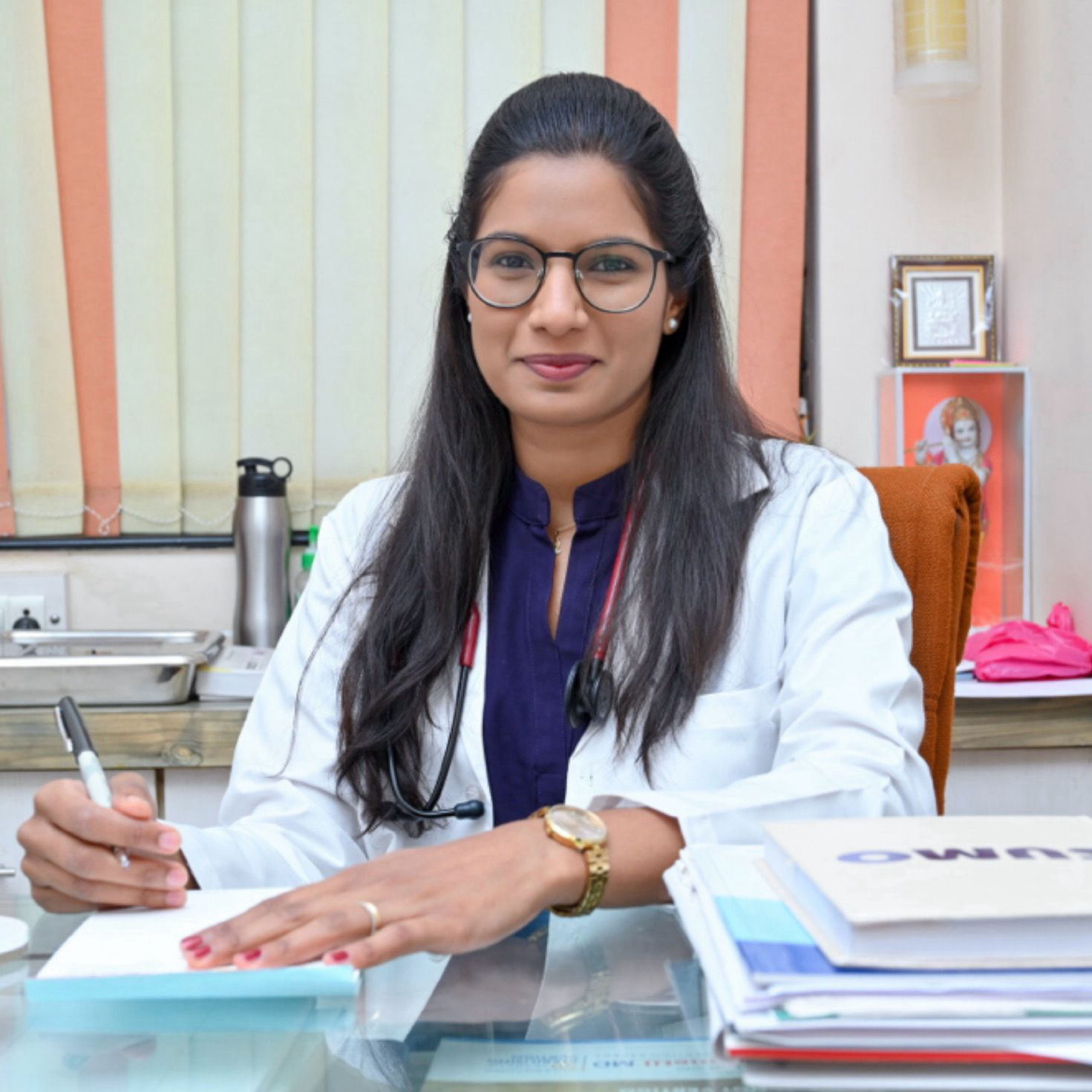
Dr. Tanvi Hirekerur-Abhyankar is a gynaecologist and obstetrician at Purva Hospital, Kolhapur. She has a particular interest in high-risk pregnancies, adolescent gynaecology, and women's health through all stages of life.
View Full Profile →Speak with Dr. Tanvi — early evaluation is always better than waiting and worrying.