Ice pack or hot water bag — it's one of the most common questions after a pain or injury. Dr. Rushikesh Abhyankar explains the science behind each and when to use what.
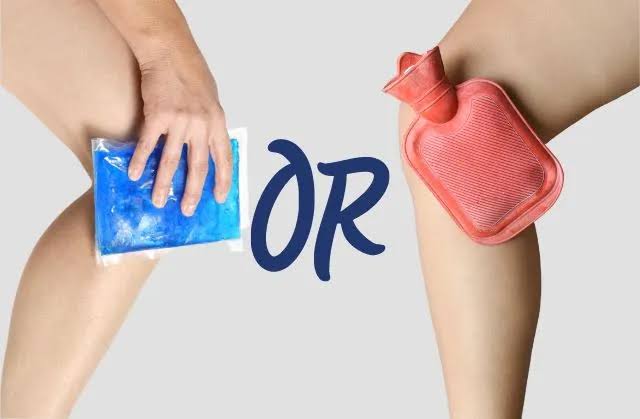
Most of us reach for either an ice pack or a hot water bag after a pain or injury — but often without knowing which one to use and when. Applying the wrong therapy at the wrong time can actually make things worse. Once you understand the science behind each, you can make faster decisions at home and recover better.
Cold causes the blood vessels under the skin to narrow — a process called vasoconstriction. This reduces blood flow to the injured area, which limits swelling, redness, and inflammation. Cold also temporarily numbs the nerve endings, reducing the perception of pain.
In the first 48 to 72 hours after an injury, the body triggers an inflammatory response — fluid rushes to the area, causing swelling and heat. Cold therapy controls this response before it becomes excessive, which is why it is the first choice for fresh injuries.
Heat causes blood vessels to widen — vasodilation — increasing circulation. This delivers more oxygen and nutrients to tight or aching muscles, helps flush out metabolic waste from chronic injuries, and relaxes muscle fibres that have gone into spasm.
Heat works best on old, stiff injuries and chronic pain conditions — situations where acute inflammation has passed and the problem is tightness, poor circulation, or deep muscle tension rather than swelling.
If the injury is less than 72 hours old, reach for cold. Once the swelling has settled — typically after 72 hours — you can switch to heat to ease stiffness and aid recovery.
| Condition | ❄ Cold | 🔥 Heat |
|---|---|---|
| Sprain / Strain (first 48 hrs) | ✓ First choice | ✗ Avoid |
| Muscle spasm / cramp | ✗ Avoid — worsens tightness | ✓ Relieves spasm |
| Chronic back / neck pain | — Situational | ✓ First choice |
| Osteoarthritis (no active swelling) | — Situational | ✓ Eases stiffness |
| Post-surgical swelling | ✓ First 2–3 days | ✗ Avoid initially |
| Menstrual cramps | ✗ Not helpful | ✓ Fast relief |
| Sports injury (on the field) | ✓ Apply immediately | ✗ Increases swelling |
| Pre-exercise warm-up | ✗ Tightens muscles | ✓ Improves flexibility |
| Headache / Migraine | ✓ Forehead or back of neck | ✗ Usually worsens it |
Cold and hot compression are supportive measures — they relieve symptoms, but they do not treat the underlying cause. Seek medical attention if you notice any of the following:
This article is for general educational purposes only and is not a substitute for personalised medical advice. If your injury or pain is severe, or does not improve with home care, please consult a doctor.
Patient names used in this article have been changed and are fictional. Any resemblance to actual persons, living or dead, is purely coincidental. Cases are presented for educational purposes only.

Dr. Rushikesh Abhyankar is an orthopaedic surgeon specialising in knee replacement, arthroscopy and trauma care. He is fellowship-trained in robotic-assisted knee replacement and a published researcher in PubMed-indexed journals.
View Full Profile →Speak with our orthopaedic team — early treatment leads to faster, better recovery.