A man in his mid-30s ignored shoulder pain for two months. When he finally came to the OPD, his frozen shoulder turned out to be the first visible sign of undetected diabetes.
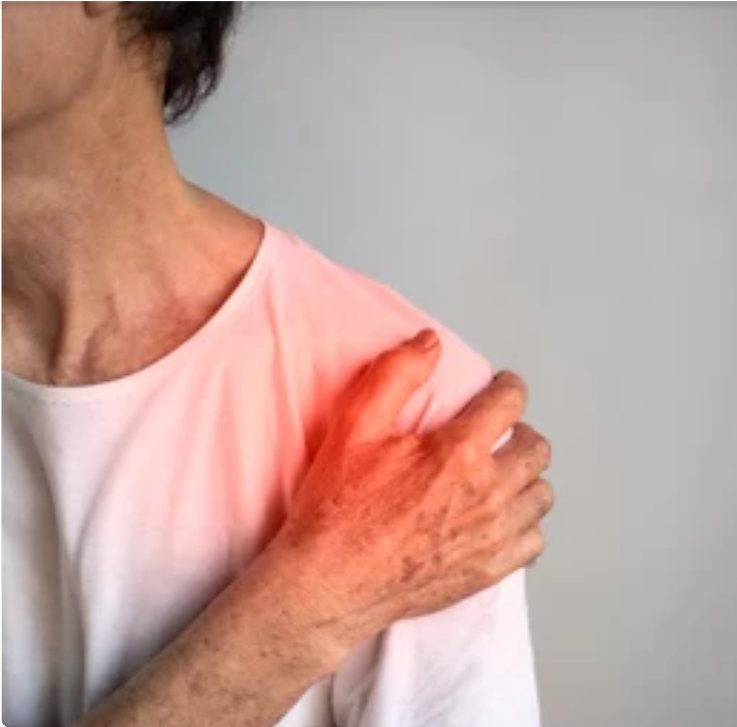
Rohan, 35 years old, working in a private company. For the past two months, he had been experiencing a gradually worsening pain in his right shoulder — at first it just felt heavy at night, then raising his arm became difficult. He told himself it was stress and fatigue and would go away on its own. Two months later, when he finally came to the OPD, he could not comb his hair, could not pull on a T-shirt, and could not sleep on his back without pain.
On examination, his shoulder showed restricted range of motion in all directions. A routine blood investigation revealed something unexpected — his Random Blood Sugar was 250 mg/dL and his HbA1c was 10.5. Rohan had no idea he was diabetic.
Frozen shoulder — medically known as Adhesive Capsulitis — is a condition in which the capsule surrounding the shoulder joint becomes inflamed, thickens, and tightens. As the capsule contracts, it progressively restricts the movement of the shoulder joint in all directions, causing what we describe as the shoulder "freezing."
It is most common between the ages of 40 and 60, but younger patients like Rohan — particularly those with uncontrolled diabetes — are not exceptions. People with diabetes are 3 to 5 times more likely to develop frozen shoulder than the general population.
Gradually increasing pain with movement. Night pain is prominent. Stiffness begins to set in as inflammation peaks.
Pain may ease slightly but stiffness is severe. Daily activities — combing hair, dressing, reaching behind — become significantly impaired.
Movement gradually returns. With proper treatment and exercise, this stage can be accelerated. Most patients recover fully.
In patients presenting with frozen shoulder, newly detected diabetes is not uncommon. Elevated blood sugar causes a process called glycosylation — sugar molecules bind to the collagen in the joint capsule, causing the tissue to thicken and contract. This is exactly what happened in Rohan's case — his shoulder froze before he even knew he had diabetes.
This is why we routinely check blood sugar levels in every patient presenting with frozen shoulder. Early detection of diabetes prevents the long-term complications that can affect the kidneys, eyes, nerves, and heart.
An HbA1c of 10.5 means his blood sugar had been consistently very high for at least three months prior — without his knowledge. Had he not come to the OPD for his shoulder, this diagnosis may have been delayed by months or even years.
Do not ignore the following signs:
Rohan was treated on two fronts simultaneously — physiotherapy and exercises for the shoulder, and medication for the newly detected diabetes. Controlling blood sugar was itself an important part of his shoulder recovery, as it reduced the glycosylation driving the capsular tightening.
Physiotherapy exercises are the cornerstone of treatment for frozen shoulder. Stopping exercise allows the capsule to contract further. Only with consistent, correct movement does the shoulder gradually free up.
Lean forward slightly and let the arm hang. Use gravity to make gentle circular motions. Excellent as a morning warm-up to loosen the joint before other exercises.
Use the opposite hand to gently pull the affected arm across the chest and hold for 15–20 seconds. Targets the posterior capsule and gradually eases stiffness.
Using a rope over a door, use the good arm to help raise the affected arm. This assisted movement gradually restores the ability to lift the arm overhead.
Hold a towel behind your back with one hand above and one below, and gently pull. This helps restore the movement needed for dressing and reaching behind the back.
With the elbow bent and the forearm against a door frame, gently rotate the body forward. Restores external rotation — typically the first movement lost and the last to return.
Usually, exercise needs to be done consistently every 3 to 4 hours so as to completely loosen the joint.
This is usually the last option and is reserved for patients who do not respond to medications and exercises. The various modalities include:
However, irrespective of any of these interventions, consistent exercise by the patient themselves remains the most crucial and determining factor for complete recovery.
Rohan's recovery took approximately six months. Having neglected his symptoms for two months, he had already progressed into the frozen stage by the time he presented. Once the right treatment was started — exercises, medication, and blood sugar control — he regained nearly full range of motion by the end of the sixth month.
If treatment is delayed or blood sugar remains uncontrolled, recovery can stretch to one or two years. Early diagnosis and consistent exercise remain the two most important factors in how quickly a frozen shoulder resolves.
Do not delay if you notice any of the following:
Frozen shoulder is entirely treatable — but only when caught and treated in time. In Rohan's case, his shoulder pain brought him to the OPD, and the same visit uncovered his diabetes. One consultation identified two problems. Because treatment started promptly, he recovered fully in six months.
This article is for general educational purposes and is not a substitute for personalised medical advice. If you are experiencing shoulder pain or stiffness, please consult an orthopaedic specialist for a proper evaluation.
Patient names used in this article have been changed and are fictional. Any resemblance to actual persons, living or dead, is purely coincidental. Cases are presented for educational purposes only.

Dr. Rushikesh Abhyankar is an orthopaedic surgeon specialising in knee replacement, arthroscopy and trauma care. He is fellowship-trained in robotic-assisted knee replacement and a published researcher in PubMed-indexed journals.
View Full Profile →Book a consultation with Dr. Rushikesh Abhyankar — early treatment means faster recovery.